The Chimney Breast Is the Enemy: A Room-by-Room IPTV Map for Old UK Homes
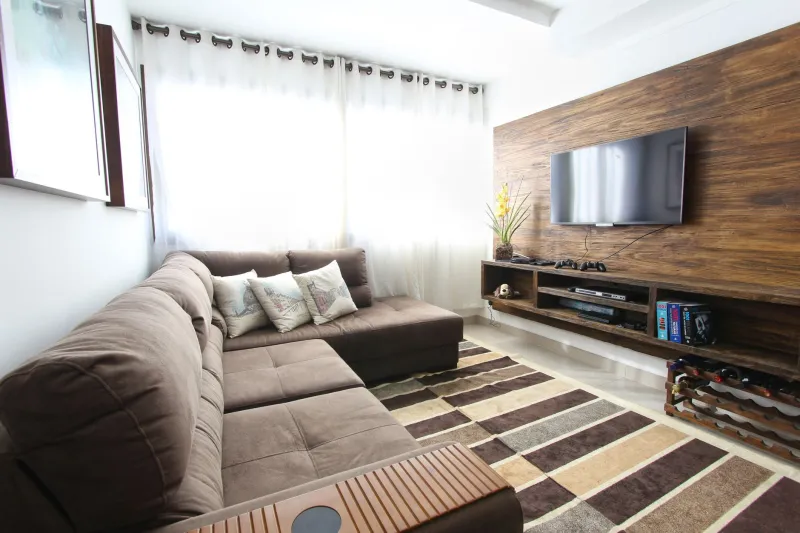
There is a particular kind of frustration that only makes sense in an old UK house. You set up IPTV in the front room, and it behaves beautifully. The football is sharp, the EPG loads, the box feels like a bargain. Then you carry the same box, or a second one, into the back bedroom and suddenly you are watching a slideshow with a side order of buffering. The natural conclusion is that the IPTV service has gone rubbish. Usually, it has not. The house has simply joined the conversation.
Victorian terraces, Edwardian semis and anything with a chimney breast and a few decades of DIY are brilliant at swallowing wireless signals. Brick is dense. Lath and plaster is not just plaster; it is a timber skeleton with horsehair and grit mixed in, and it can behave like a clumsy faraday cage. Add foil-backed insulation, old coax runs that go nowhere useful, and a router tucked behind a telly in the corner, and you have a perfect storm for multi-room IPTV that works in one room and sulks in another.
Start with a room-by-room audition, not a service review
Before you ring the provider or start shopping for new hardware, test the rooms separately. Take one known-good device, ideally the box that works in the front room, and give each room a proper ten-minute audition. Do not just open the app and call it a day. Load a live channel, let it run, then jump to a catch-up programme and scrub through it. Try a high-bitrate stream if the service has one. Watch for the first thirty seconds after you change channel, because that is when the box is doing the most work and the network is least forgiving.
Keep a simple note for each room: signal strength on the box, whether the stream holds without stalling, how long the EPG takes to populate, and whether the remote feels sluggish. If the same box behaves badly in the back bedroom but fine in the front room, you are not diagnosing IPTV. You are diagnosing a path.
The front room is not the control room
One common mistake is assuming the router's location is neutral. It is not. In a terrace, the front room often has the router because that is where the phone line or cable entry comes in. That room then becomes the benchmark, and every other room is judged against an unfair advantage. The back bedroom might be through two walls, a chimney breast and a closed door. The kitchen might be a diagonal hop through a galley layout with a boiler and a fridge in the way. The loft conversion might as well be in another postcode.
So test each room as its own little venue. If the box works near the router but not across the hallway, that is useful information. It tells you the service is probably fine and the wireless path is not.
Mesh systems help, but not in a magical way
A mesh Wi-Fi system can genuinely improve multi-room IPTV in an old house, but only if you place the nodes sensibly. Dropping a mesh node in the same corner as the router and hoping for the best is not a plan. You want a node somewhere between the router and the troublesome room, with a clear-ish path and, ideally, a wired backhaul if you can manage it. Even a short Ethernet run from the router to a hallway node can transform the back of the house.
The catch is that mesh nodes still need to talk to each other. In a Victorian terrace with thick internal walls, a node placed behind a chimney breast is just a expensive doorstop with a blinking light. Put it in the open, high up, and away from the boiler, microwave and cordless phone base. Then test again. If the back bedroom improves, you have found your weak link. If nothing changes, the problem may be the device's Wi-Fi chip, the room's layout or the coax path, not the IPTV service.
Powerline adapters are a useful tool, not a religion
Powerline adapters can work well in some old homes because the electrical ring main sometimes offers a path that wireless cannot. They are also famously variable. Old wiring, surge protectors, extension leads and different ring mains can all ruin the party. The only way to know is to test a pair in the actual rooms you care about. Buy from somewhere with a returns policy, plug them in directly at the wall sockets, and run the same ten-minute audition.
If powerline works, it can be a neat fix for a second TV that only needs a steady HD stream. If it does not, do not keep adding adapters and hope. That is how people end up with a small museum of networking gadgets and no working telly in the spare room.
Chimney breasts, alcoves and the geometry of old houses
Chimney breasts are the classic villain. They are solid, often central, and they create alcoves that look perfect for a TV until you realise the router is on the other side of a brick mass. A box tucked into an alcove can also struggle because the TV, wall and chimney breast form a little pocket. Sometimes moving the box six inches out of the alcove or putting it on a shelf rather than behind the TV is enough to change the result.
The same goes for old coax runs. A previous owner may have run cable through a wall, under a floor and out through a redundant aerial socket. It might be useful, or it might be a dead end with a corroded connector. If you are relying on an old coax run for a second room, test it before you build a whole viewing plan around it.
Plan multi-room viewing around the house you have
The practical answer is usually a mix. Put the main IPTV box where the network is strongest. Use a wired connection for the main telly if you can, even if it means a flat Ethernet cable under a rug or a discreet run along a skirting board. For secondary rooms, choose devices that suit the signal you actually have: a stick or box with decent Wi-Fi, a mesh node nearby, or a powerline adapter that has passed the audition. Do not expect every room to support four simultaneous 4K streams just because the service advertises them.
And be honest about the architecture. A Victorian terrace is not a modern new-build with stud walls and a handy cupboard full of structured cabling. It is a house with opinions. Once you have mapped the weak spots, you can stop blaming the IPTV service for the chimney breast and start solving the actual problem. That is usually cheaper, calmer and far more effective than another month of guesswork.